
The word of trading one word is really truth which is single indicator works perfectly in every time. Most of the beginners believes indicators like RSI or MACD can works like magically in live market, But they are wrong this move leads to end up their capital and quitting from trading.
Each indicators have their own credibility so professional traders will use combine indicators instead of one single indicator or tool, using two or more indicator at time for trend direction, entry and exit moves, momentum conformations. So this article will cover the one the Best combine trading tool RSI and Stochastic Strategy with MACD.
This Strategy best for beginners because this is designed to be simple and logical and realistic in live market, this strategy was back tested around 100 times in live trading. By the end of this article you will learn why most of the beginners misuse the indicators, is single indicator works or not, how to combine indicators for high profitable setup, risk management, practical tips for strategy with clear cut rules based trading setup.
Why Single Indicators Fails
Traders make one of the biggest mistake is using single indicator,
example
- Buying every time when RSI is oversold
- Selling every time when stochastic was overbought
- Taking position in MACD crossover
Indicators do not move remain oversold and overbought in high volatility market, Market never move in a single straight line so using single indicator will not good move it causes low win rate and fake breakouts. traders wants conformations. so professional traders ask multiple questions to multiple indicators instead of the trusting on single indicator. The different questions you ask
- Is the market trend is down trend or up trend?
- Is volume is enough to enter into trade?
- is momentum is supporting the move?
Overview of the Strategy
This strategy comes with there indicators one has very specific role Stochastic oscillator this is used for timing will take the position by identifying either market oversold or overbought situations. Second one is RSI it used for trend confirmations is not traditional tools it will indicate the strong dominate directions to take the trade in market. And final one is MACD it is used to confirm the momentum it will helps to traders to taking fake breakout or low strength trades.
Indicator 1: Stochastic oscillator
Stochastic oscillator is the momentum indicator which is conform the closing price to price range over the specific period. it usually helps to traders to identify the overbought and oversold conditions.
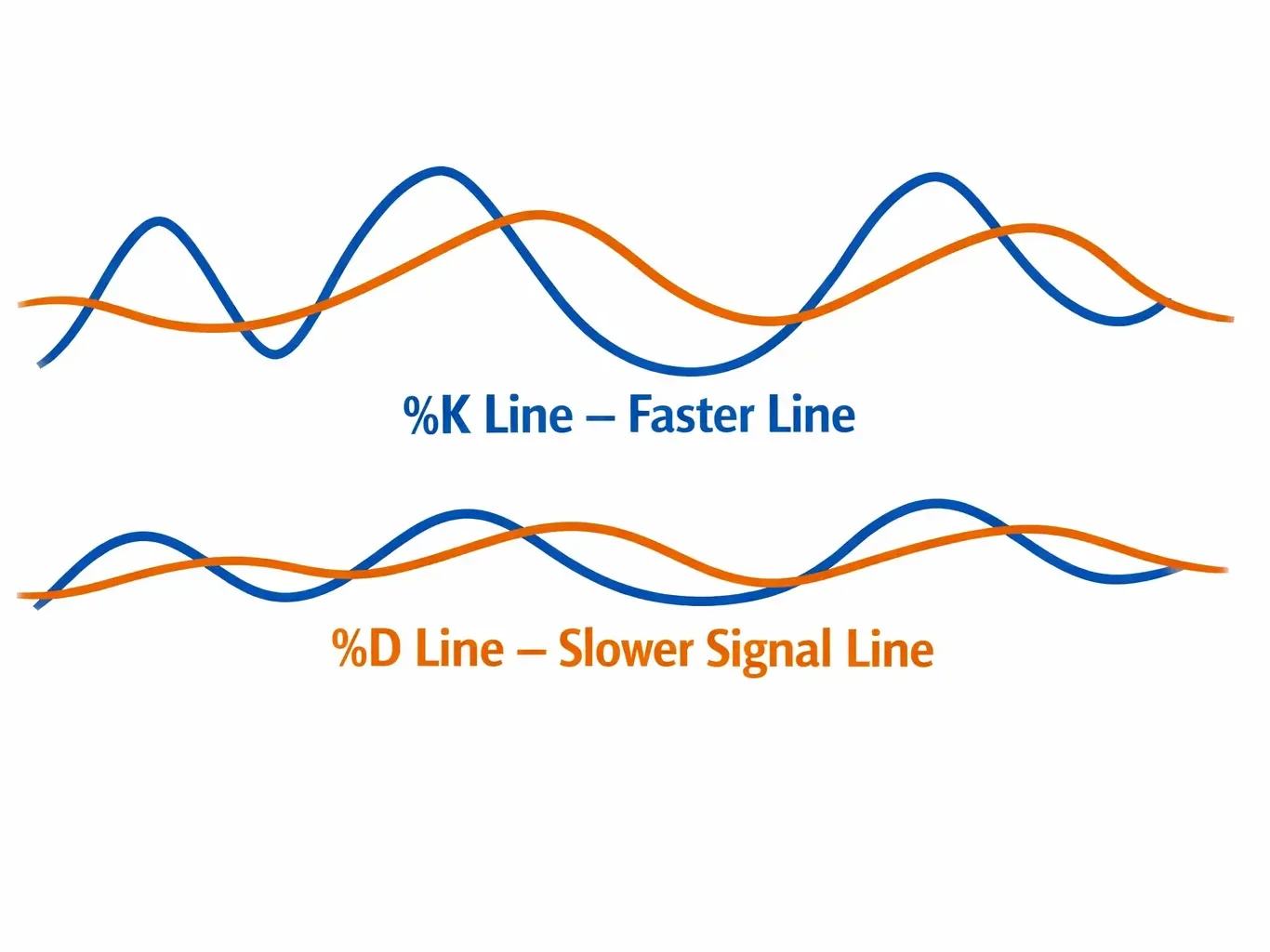
It consists two lines
- % K line (blue) – it move fast so this called faster Line
- % D line (orange) – This is slower signal line
Overbought and Oversold Zones
- Oversold is consider below 20
- Overbought is above 80
- When both line enter in same zone that will consider as stretched
Common mistakes traders may do
Many traders may to when market overbought they will buy immediately, Or they may sell immediately when market oversold. this approach quick move the results is loss. because price at the levels may pull back or reversal. So do not use this indicator as buy/sell suggestion it acts like timing tool. actually take the trade after combine with RSI and MACD.
Indicator 2: RSI (Relative Strength Index)
Most traders buy or sell when RSI levels is 30 and 70 but this strategy’s winning ratio is very low. Instead of using this traditional strategy use this, Set the RSI levels to 50 do not use 30 & 70 levels. And big question is how to confirm the trend using RSI:-
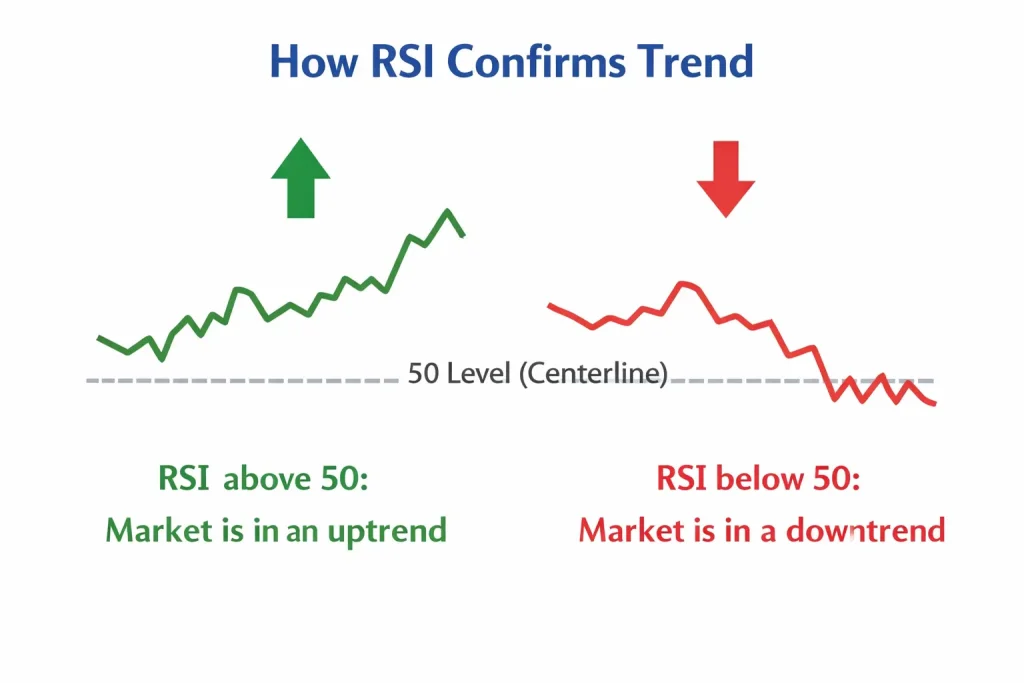
- Set The RSI above 50 when the market is in uptrend
- Set the RSI levels below 50 when market is downtrend
- Use only uptrend and downtrend
Indicator 3: MACD Momentum Confirmation
MACD means moving average convergence divergence it is a momentum indicator indicate the relationship between two moving averages.
Common Mistakes and Strategy to use
usually many traders take position either buying and selling when MACD crossover. But if market moves sideways it gives fake signals. The strategy is MACD is used only for confirmation not buying or selling.
MACD Rules
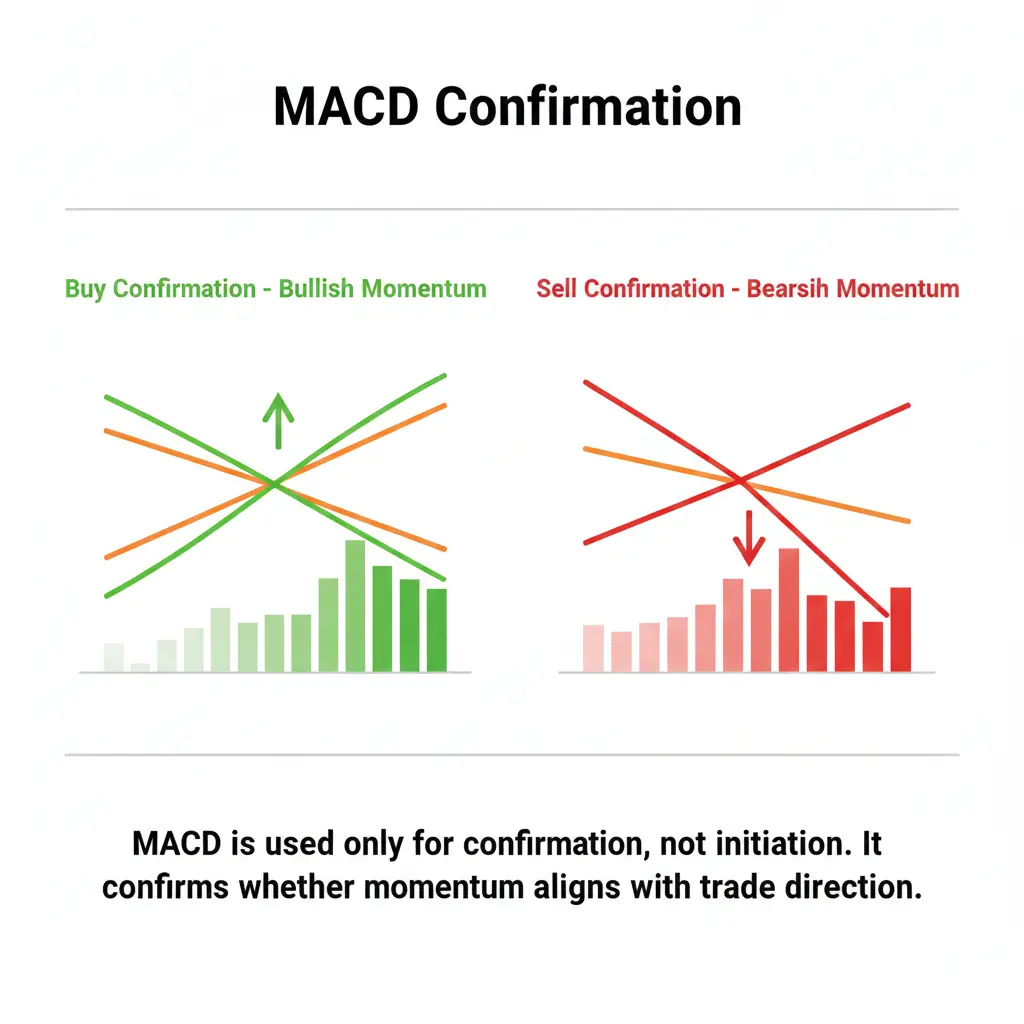
- Buy confirmation is MACD crosses above single line
- Sell conformation MACD crosses below single line
- Only confirmation considering after stochastic and RSI
Best RSI and Stochastic Strategy 2026
Buy Entry Rules Explained Detail
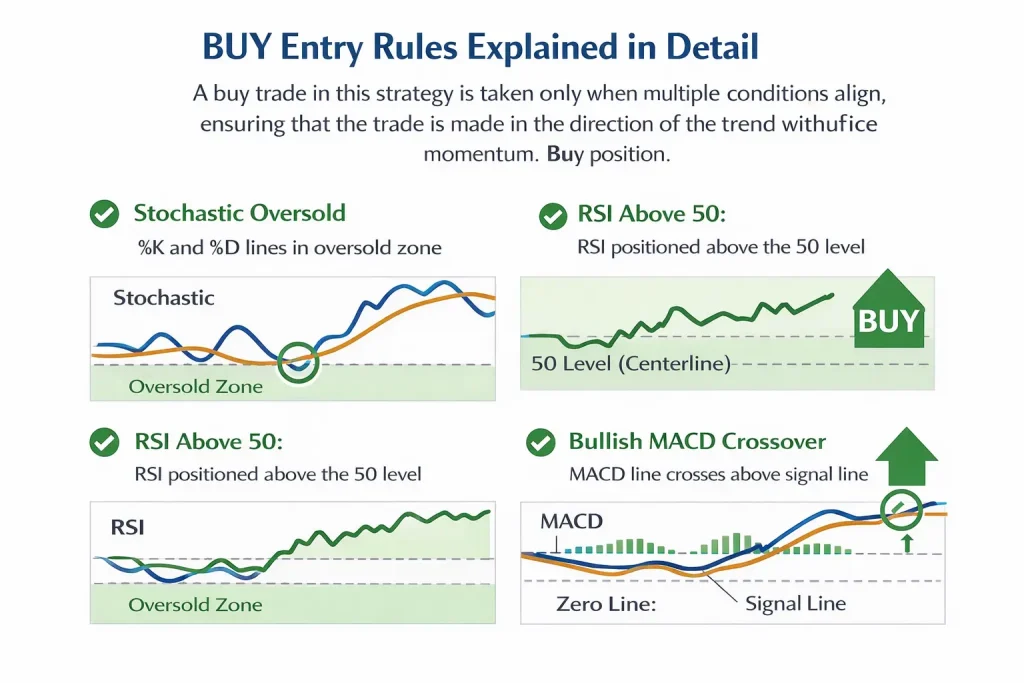
Use this strategy is taken only multiple conditions are fulfilled, Ensuring that the trade is made in the direction with sufficient momentum. First trader observes the Stochastic indicator and wait patiently for both % K and % D lines to move into oversold zone. this condition only used price has pulled back enough to offer buying opportunity.
Once the market reaches this oversold condition, then confirm the trend using the RSI for confirmation. The RSI must be above the 50 levels, which indicates the bullish structure. This rules prevent traders from buying during downtrends, where oversold condition lead to loss.
After confirmation the trend the momentum must be support the trend. this is where MACD comes into the ground. valid buy setup requires MACD line to cross above the signal line when it was signaling the bullish momentum is entering the market. Even after this crossover, traders must ensure that the Stochastic has not yet reached the overbought zone. If price is already overextended, the risk-to-reward becomes unfavorable.
When all the conditions fulfilled oversold stochastic, RSI above 50, bullish MACD crossover and no overbought signal so traders can confidently take the buy position with logical analysis.
Sell Entry Rules Explained Detail
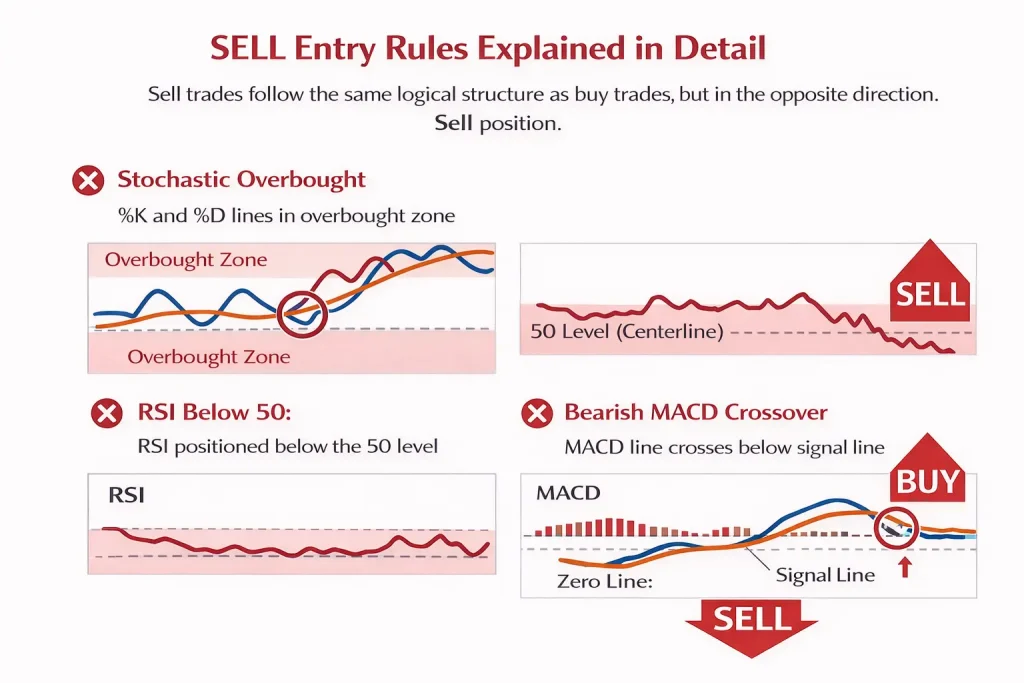
Taking the sell trades as like buy trades but here small changes should be done which is take opposite side or direction. While taking the position you need to wait for the Stochastic inductor to move into the overbought area. With more confirmation both %K and %D lines positioned the above the upper point.
The next and more confirmation will comes with RSI for the valid sell setup, RSI should be below 50 level, More over trend should be bearish. When market moves to downward this rule comes to the picture because it was only depends on selling position. in case market takes reversal or pull back trade will goes against.
And MACD comes with momentum confirmation, Sell trade should be taken after MACD line crosses below signal line it will indicate the bearish momentum will comes to the market. while taking the trade traders must confirm Stochastic has not reaches the oversold zone, if you enter too late the winning rate will reduce.
When all the condition are satisfied like overbought stochastic, RSI below 50, bearish MACD crossover the traders can take the position with confidence more over discipline is must.
Stop Loss and Profit Taking Strategy
Stop Loss placement always ensure with logical levels
- buy trades – If you taken the buy trade place the stop loss at below the nearest swing low
- Sell trades – If you taken the sell trade place place the stop loss at above nearest swing high
Profit Taking is creates the positive risk and reward ratio, this is helps to profitability if even with low win rates.
- Take profit – 1.5 x Stop loss distance
Who Should Use This Strategy?
This Strategy suitable for:
- Beginners who are at learning stage
- Intermediate traders who are seeking consistency
- Traders who are prefer confirmation rather than blind trades
- it will be best for Forex, Crypto and index traders
- This Strategy is not suitable for Scalpers
- Trades who are not follow the rules, disciple it was not good for them
Final Thoughts
The Stochastic RSI MACD strategy works because those satisfied there critical elements which is direction, timing and momentum, Every one will guess the market move but instead the of predicting understanding with logically what is price doing. But remember one think no strategy has guaranteed success rate but rules based setup and discipline with proper risk management always has the real edge for trading. So follow with discipline and stay consistence this strategy become the strong foundation for traders who are looking for long term success.
(Disclaimer: This article is for educational purposes only and does not constitute financial advice).